Are you ever doubtful or curious if you’re not doing what’s right for you?
What to Expect
Written Report: Details your genetic evaluation,
providing insights that remain relevant for your lifetime.
First Meeting: Due to the volume of information,
we will meet as you open the report to make the best use of our time.
Second Meeting: Questions, comprehension, and compliance guidance.
I recommend that a parent or other support resources be present during the second and third meetings.
Other follow-up services are available.
Athletic DNA Analysis
Your future… “For what is right with you” is in your DNA
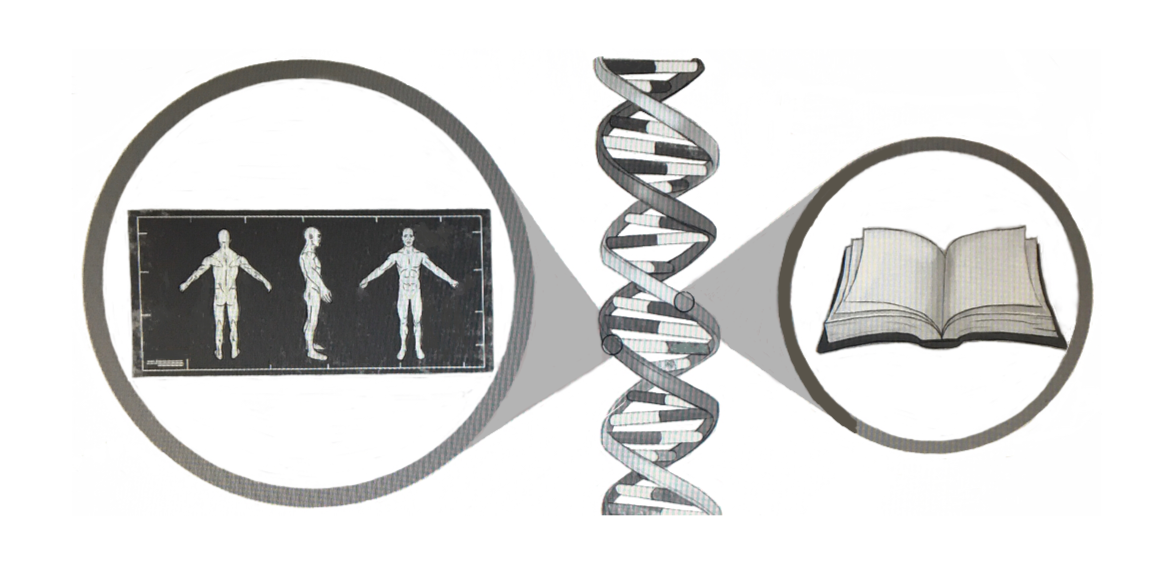
Genetic testing has existed in various forms for more than 70 years for many reasons.
Clinical Genetic Testing
(Medical diagnosis and treatment for what is wrong with you…)
As a former clinical dietitian, I often worked with medical teams that used advanced genetic assessments like Whole-Genome Sequencing and Pharmacogenomics to analyze vast amounts of DNA data used for diagnosing and treating complex conditions. Due to privacy risks, HIPAA protects this sensitive Protected Health Information.
SNP Genetic Information
(General wellness and athletic performance traits for what is right with you!)
Today, as an author, researcher, educator, coach, and world-record athlete, I draw on my experience to deliver DNA-driven education tailored to enhance wellness and daily performance. Instead of exposing a large genetic panel with billions of data points (protected under HIPAA), direct-to-consumer information (subject to FTC regulation) uses small variations within a single gene (known as single-nucleotide polymorphisms, or SNPs) that reveal less than 2% of the genome.
The written report provides actionable insights across five key areas:
Behavioral Tendencies: Understanding genetic markers related to personality traits, stress responses, and cognitive habits.
Nutritional Guidelines: Identifying metabolic predispositions, food sensitivities, and micronutrient needs.
Injury Risk Mitigation: Spotting structural or connective tissue vulnerabilities to guide safer training.
Sleep & Recovery Optimization: Aligning daily schedules with your natural circadian rhythms and energy patterns.
Muscle Composition: Muscle fiber types exist along a fluid, ever-changing biological spectrum, heavily influenced by the nurture of your nutrition, training, and recovery.
Muscle Type = Nature
Muscle Use = Nurture
But Where Does your DNA start?
“It’s in your DNA” starts with your COMT “competitive” gene, which shapes your personality and drive by regulating dopamine. This dopamine balance then supports over 130 genes linked to nutrition, hormones, and physical performance.
The COMT "warrior-type" gene shapes mental and emotional behaviors and dietary needs by influencing how individuals respond to pressure, competitiveness, self-motivation, and nutrition.
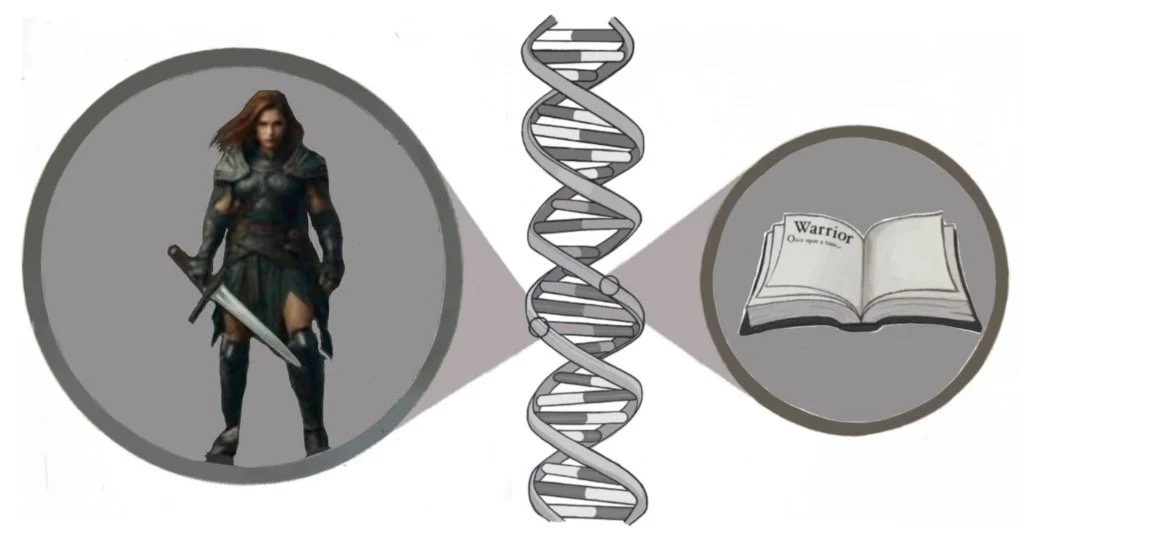
Warrior
(adrenaline-based)
You bring the event to you.
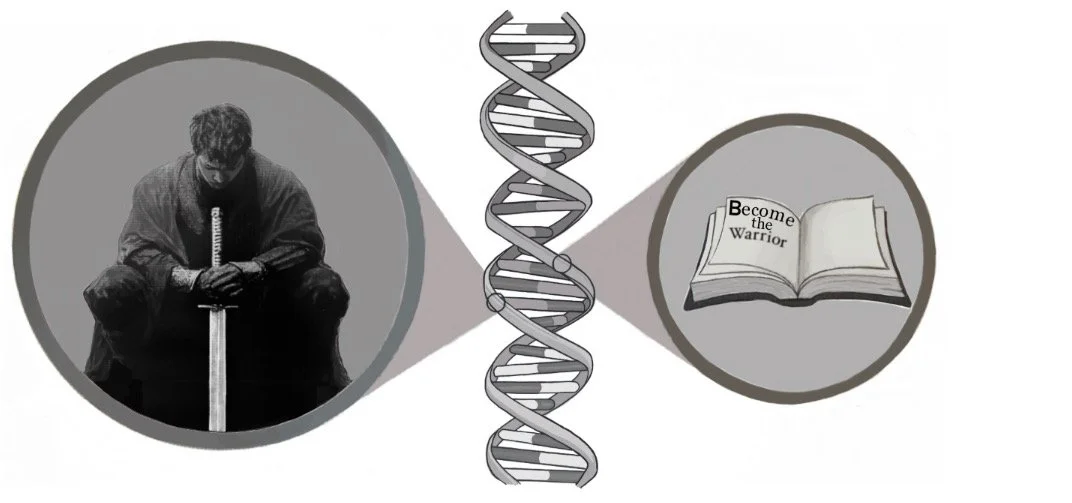
Become the Warrior
(dopamine-based)
The “calm before the storm.”
Athletic genetics
Pain sensitivity: Do you understand the difference between bad pain vs. good pain, athletic pain vs. medical pain?
Recovery: Do you recover in less than 12 hours, or does it take you 48 hours?
Detox: Phase 1 “Activation”, Phase 2 “Conjugation”, Phase 3 “Elimination”
To prevent harmful “bottlenecks” and toxin reabsorption in Phases 2 and 3, you may need specific recovery processes.Collagen/Injury-risk: Did you know there are 28 forms of collagen in the body?
Genes COL1A1, COL2A1, COL3A1, and COL5A1 correlate with potential injuries and differences in flexibility, muscle soreness, tensile strength, Achilles tendinopathy risk, structural resistance to tensile stress, and susceptibility to ACL tears.
Sleep: Do you need 7-8-9 hours of sleep, more or less? Are you susceptible to frequent vivid dreams? (Overly vivid dreams can be a sign of stress, anxiety, sleep disturbances, and nutritional gaps.)
It’s no longer calorie in, calorie out.
Nutrient in, Nutrient out depends on how you use specific nutrients based on your genetics.
Nutrition genes
MTHFR gene and SNP differences are related to creatine intake, B vitamins, and methylation processes… (and it's complicated for some, easy for others).
Animal- versus plant-based diets: Do you thrive best on plants alone, or do you need a balanced blend of animal and plant proteins? Do you know if you have the “vegetarian/vegan gene?”
Hunger sensitivity genes, like those affecting the GLP-1 gut peptide, can artificially boost your appetite and trigger emotional stress eating.
Gut health genes, like those that regulate gut microbes, microbial metabolites, microbial diversity, mucosal inflammation, and the production of short-chain-fatty-acid-producing bacteria.
Protein requirements vary by warrior-type. Warrior athletes need more protein than Become the Warrior athletes due to their higher adrenaline-driven nutrient turnover.
Adaptogens: Do you know how adaptogen-related genetics support physical processing?
Nootropic: Do you know how nootropic-related genetics support mental and emotional processes?
Depending on your genetics, you need between 5,000 and 25,000 different nutrients based on food density-related genes. For example, "Warrior" athletes require a higher volume of food with fewer nutrients, whereas "Become the Warrior" athletes need a lower volume of nutrient-dense food.
Hydration/Electrolytes
Genes related to nutrition for training and recovery.
Hormone / Flow state genes
Dopamine regulates motivation, drive, focus, motor control, learning, and nutrition.
Serotonin regulates central nervous system fatigue, stress tolerance, muscle-fiber adaptation, physical and emotional pain, energy balance, and synaptic cleansing.
Adrenaline regulates heart rate, lung capacity, blood vessel dilation, blood volume, and carbohydrate and fat utilization.
Endorphins regulate pain tolerance, enhance mood, improve stress resilience, reduce fatigue, and provide the body with reward.
Anandamide is responsible for the brain’s euphoric mental and emotional “runner’s high.” It also affects pain perception, physical recovery, inflammation, and receptor density, which enhances spatial acuity, synaptic strength, and cellular sensitivity in the brain.
Oxytocin is a bit more complicated and creates three forms of love…
Love of Others
Love of Self
Love of Life
While “it’s in your DNA," your best Nature is achieved through the enhanced Nurturing acts of…
What you eat. How you feel.
What you do. How you think.
Thanks to breakthroughs in DNA analysis, there is…
No more guessing
No more random advice
Who are you? What is your story?