Do you ever worry or curious if you’re not doing what’s right for you?
Sports DNA - Analytics
A doctor will help find what is wrong with you.
I will help find what is right with you.
(To live and write your own true story.)
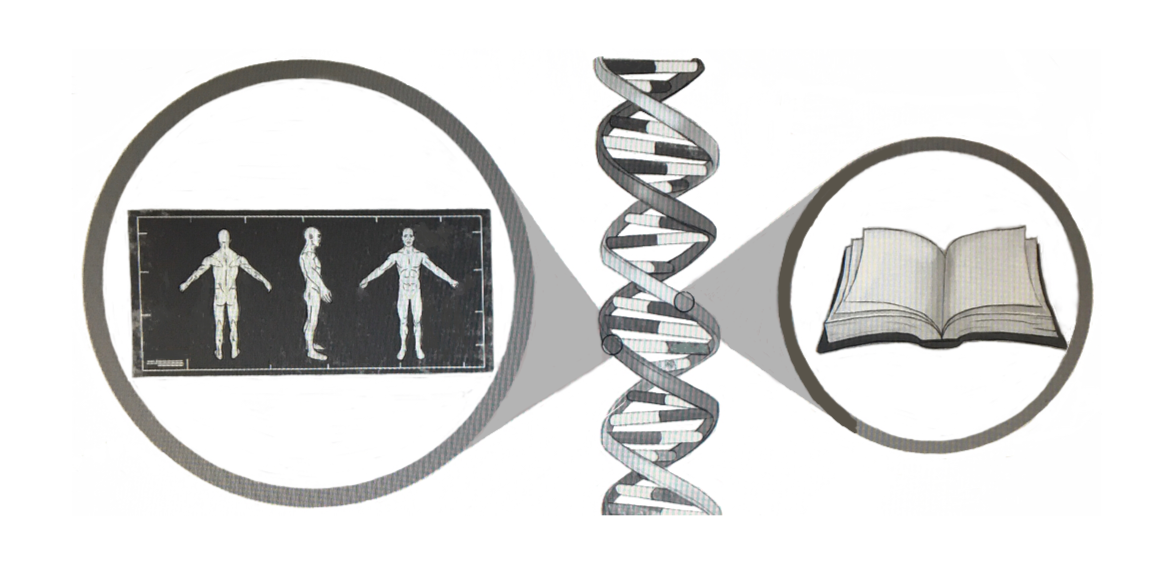
If you are open and want to learn about yourself, this will change your life.
The Sports DNA-Analytics report is based on SNP ancestral genetics, gender, age, current weight (goal weight), sport, and athletic events. DNA information and recommendations are performance-oriented and will provide answers and clues aimed at filling in many blind spots… commonly known as… you don’t know what you don’t know.
For example, did you know (or not know)… no one is 100% fast-twitch or 100% slow-twitch.
The rigid, fast-twitch or slow-twitch knowledge within the fitness culture is a misinterpretation.
Muscle fiber types exist along a fluid and ever-changing biological spectrum, highly influenced by training…
Muscle Fiber Type - Nature
Type I: Slow-twitch, high aerobic oxidative capacity for endurance.
Type IIa: Fast-twitch, oxidative-glycolytic, moderate fatigue resistance with higher mitochondrial density.
Type IIx: Fast-twitch, glycolytic, fast fatigue that relies purely on quick speed and short bursts of power.
Did you know (or not know) that all muscle groups follow a unique sliding scale between 15% slow-twitch/fast-twitch and 85% fast-twitch/slow-twitch, with varying distribution of fiber type dominance within the 12 major muscle groups?
For example… The calves (soleus) muscle and the lower back (erector spinae) consist of 75-85% fatigue-resistant slow-twitch fibers for everyone, as these muscles work all day long, fighting gravity for balance and posture.
The remaining muscle groups (trapezius, deltoids, pectorals, biceps, triceps, abdominals, latissimus dorsi, glutes, hip flexors, and quadriceps/hamstrings) are all mixed. For example… biceps fall in a range of 60% fast-twitch and 40% slow-twitch, triceps fall in a range of 70% fast-twitch and 30% slow-twitch, and lats fall in a range of 55% fast-twitch and 55% slow-twitch. Based on genetics and highly specialized training, the subunits of Type IIa and Type IIx can, will, and must adapt.
Muscle Adaptability- Nurture
Oxidative overlap: Type IIa fibers can adapt through endurance training to act more like slow-twitch fibers.
Plasticity: Type IIx fibers can convert into Type IIa fibers first before shifting closer to oxidative profiles.
Training adaptation: Heavily influenced by genetic variation that controls fiber composition, oxygen use, and metabolic signaling.
Muscle Type - Nature
Muscle Use - Nurture
Now for the tricky part. While ‘Nature’ determines muscle type for ‘what’ your muscles are, DNA also influences the adaptability for ‘how’ and ‘why’ you are able to use them based on your dreams, drive, and goals, and drive.
For athletic purposes, your Sports DNA analytics starts with your COMT “competitive” gene that establishes your athletic drive, which sets the physical, mental, and emotional resource viability for the 134 other athletic & energetic-related genes.
COMT “competitive” gene determines your warrior-type, which greatly influences mental and emotional patterns, competitiveness, positive or negative responses under pressure and at peace. This gene also determines separate nutritional paths, requirements, do’s and don’ts between one warrior vs. the next warrior.
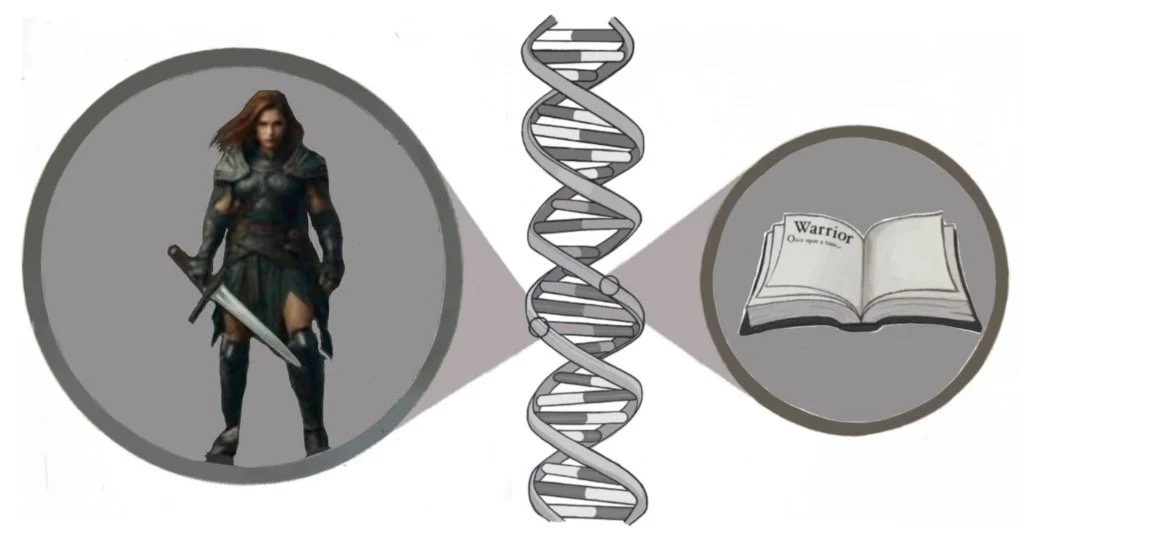
Warrior
(adrenaline-based)
You bring the event to you.
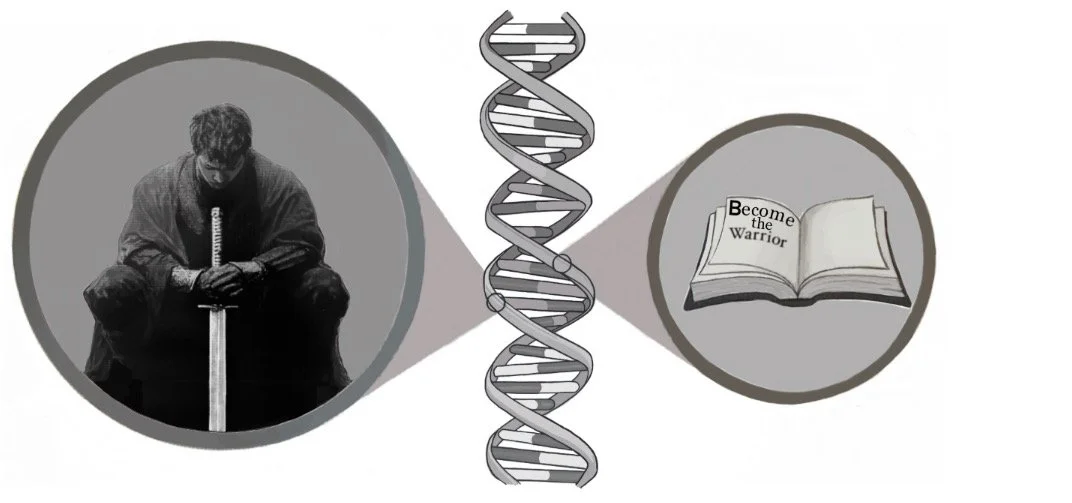
Become the Warrior
(dopamine-based)
The “calm before the storm.”
Athletic-related genes…
Pain sensitivity genes. (bad pain vs. good pain, athletic pain vs. medical pain)
Recovery genes (Do you recover in less than 12 hours, or does it take you 48 hours?)
Detox genes. Is your Phase-1 “activation,” Phase-2 “conjugation,” and Phase-3 “elimination” process fast-fast-fast, fast-slow-fast, slow-slow-fast, fast-slow-slow, slow-fast-slow, or slow-slow-slow? To prevent harmful “bottlenecks” Phase 2 and Phase 3, you may require specific recovery processes and nutritional support to prevent harmful toxins from being reabsorbed into the body.
Collagen/Injury-risk genes: Did you know (or not know) there are 28 forms of collagen in the body? Genes COL1A1, COL2A1, COL3A1, and COL5A1 correlate with potential injuries and differences in flexibility, muscle soreness, tensile strength, Achilles tendinopathy risk, structural resistance to tensile stress, and susceptibility to ACL tears.
Sleep genes: Are you a “night owl” or “early bird?” Do you need 7-8-9 hours of sleep more or less? Are you susceptible to frequent vivid dreams? (Overly vivid dreams can be a sign of stress, anxiety, sleep disturbances, and nutritional gaps.)
Energy-related & Nutrition-related genes
The old school concept of Calorie in vs. Calorie out…
has been replaced with Nutrient in vs. Nutrient out based on genetics.
MTHFR gene related to creatine, B vitamins, and methylation processes… (and it's complicated for some, easy for others).
Animal-based vs. Plant-based (Do you have the “vegetarian genes” to become fully plant-based, or do you need the appropriate blend of animal and plant proteins?)
Hunger Sensitivity genes (such as the GLP-1 gut peptide) can drive your appetite higher than it should be, which can also trigger emotional stress eating.
Protein needs vary by warrior-type. Protein requirements are not the same for every athlete. Due to the chemical complexity that drives the need for adrenaline, Warrior athletes require more protein than the Become the Warrior athlete, who has slower nutrient turnover.
Adaptogens genes: Adaptogens feed the body for the use-repair-prepare process.
Nootropics genes: Nootropics feed the brain for the use-repair-prepare process.
Food density-related genes: Depending on genetics, you need somewhere between 5,000 and 25,000 different types of nutrients. (Warrior athletes need fewer nutrients with more volume, and Become the Warrior athlete needs more nutrients with less volume.)
Hydration genes:
Electrolyte-related genes:
Pre-training nutrition-related genes:
During training nutrition-related genes:
Post-training nutrition-related genes:
Analytic-Emotional-Athletic brain-related genes… As you continue to fill in the empty spaces of… you don’t know what you don’t know, there are 6 specific hormones - Dopamine, Serotonin, Adrenaline, Endorphins, Oxytocin-gla, and Anandamide - that form a symbiotic bond for you to be able to reach a flow state to be “in the zone.”
The use and results of each hormone are also highly programmed through your genetic code.
Dopamine gene regulates motivation, drive, focus, motor control, learning, and nutrition.
Serotonin gene regulates central nervous system fatigue, stress tolerance, muscle-fiber adaptation, pain (both emotional and physical), energy balance, and the cleansing of brain synapses.
Adrenaline gene regulates heart rate, lung capacity, blood vessel dilation, blood volume, carbohydrate and fat utilization.
Endorphin gene regulates pain tolerance, mood enhancement, stress resilience, fatigue reduction, and physical reward for the body.
You don’t know what you don’t know… Endorphins do not cause a “runner’s high.” Recent research has discovered…
Anandamide gene is and always has been responsible for the euphoric feeling of the “runner’s high.” Along with pain perception, physical recovery, inflammation, and receptor density, which enhances spatial acuity, synaptic strength, and cellular sensitivity.
Oxytocin gene is responsible for heart health, muscle health, a healthy gut, and social bonding with teammates.
While some of these flow-related genes run on their own, some of them need extra help and attention achieved through…
What you eat. How you feel.
What you do. How you think.
your future…”For what is right with you”… is in your DNA
As a former clinical dietitian, I have spent a great deal of time assisting various medical practitioners in identifying what is wrong with a patient and then spending considerable effort to find the right solutions to address their biological “weaknesses.”
Today, as an Author, Researcher, Educator, Coach, and World Record setting Athlete, I draw on my extensive experience in the lab (exercise physiology lab), the clinical setting (hospital), and in the field (as a world-class athlete, high-level coach, and sports dietitian) to identify what is right for you and provide “for what is right with you” solutions that build on the strengths of your DNA.
Expectations
From the raw data from various direct-to-consumer DNA tests, I will generate your
genetic performance report with two follow-up meetings via video conference call.
Written Report- good for the rest of your life!
First Meeting - evaluate the report.
Second Meeting - comprehension and compliance.
(Other follow-up services are available.)
As the DNA lab results can take 10-20 days, reading the book is time well spent “to become more human.”
To obtain and retain vital information from your report and meetings, it is highly recommended that you read the book, which opens a two-way street of knowledge, creating a symbiotic relationship based on…
You know what I know, and I know what you know.
This two-way street will save us a lot of time during the one-on-one meetings. For example… There are a few challenging genes, such as mental and emotional genes, that vary widely from person to person. Some memories and experiences can overstimulate certain gene expression, causing heightened emotional activity in the amygdala regions of the emotional brain, thus exposing you to vulnerabilities to unwanted thoughts and actions.
While these genes can serve a positive purpose, we may need more time to learn how to reduce their negative expression. (If these genes continue to cause unwanted thoughts and behaviors, I can provide a call to action resource list with in-depth objectives for further discussion with a sports psychologist or therapist.)
A team approach between us and a parent, caregiver, coach, or any other support resource is an option.
But what does it mean “...to become more Human?”
“More human”… driven by Nature… will move an athlete beyond overly protective limitations.
Within the scientific community, scientists believe there is a “central regulator” that manages the biological output of life, enabling the body to achieve survival objectives with minimal effort. The baseline survival state (with minimal effort) falls within the 60-80% regulated zone, preserving 20-40% of your energy and higher functionality for emergencies. (When a parent can lift a car off their child.)
Under the idea of a “central regulator” (or Central Governor), the brain acts as a controller that regulates physiological stress, core temperature, muscle and oxygen use… to prevent “peripheral fatigue.” Unfortunately, the brain limits what the body can do through a series of feedback systems known as “pacing and protection.” This protection limits or controls muscle use through the perception of pain and emotional fatigue well before the body’s limits are reached. (As an athlete, this is not what you need or want!) With caution… running more does not make you a better runner… training smarter, recovering better, and eating to match your genetics is the true purpose of DNA analytics for what you need and want.

Less Human, Average Human, More Human
As an athlete, your choice of effort can move you in three directions…
Less Human choices are driven by a feedback mechanism… to just barely survive. Refers to a state of suppressed biological potential, in which the body is prevented from achieving basic objectives.
Average Human (the comfort of protection) is the baseline state of comfort with minimal “successful” effort, as the body operates within the 60-80% regulated zone that balances physical obligations (of just showing up) with energy and emotional preservation (to limit pain and fatigue).
More Human (driven by an evolutionary feedforward mechanism… to dominate) operates under the idea that “nature calls us” to drive beyond evolutionary boundaries through intense adaptation. Being athletically driven beyond nature unlocks physical, mental, and emotional capabilities that increase output at all levels, transcending fight-or-flight into a higher state of striving and thriving that taps into all of your “dig deep” reserves.
“Average human” requires effort….
Until you get it right.
And then “More human” effort…
Until you can’t get it wrong!
Thanks to breakthroughs in DNA analytics, there is…
No more guessing
No more random advice
No more train and error
…Decode, learn, and apply…
Who are you and what is your story…