
The Gate Control Theory of Pain determines which signals (pain or sensory) reach the brain. As an athlete, you want as much muscle sensory information as possible to reach your athletic brain. But as every athlete knows…
“I am inevitable.”
-Pain
When you use your muscles, information in the form of pain (muscle fatigue) or sensory input (muscle movement) must travel up the spinal cord to the brain for processing to continue (with more effort) or to shut it down (with less effort). This either/or process helps determine whether to continue pushing forward with good athletic pain (muscle use) or to decrease muscle use due to bad pain.
This system relies on four types of nerve fibers:
Large-diameter fibers carry non-pain (sensory) information through the spinal cord's gate control to the brain.
Small-diameter fibers carry pain signals through the same gate control to the brain.

A-alpha primary action fiber A-beta secondary action fiber A-delta pain fiber C pain fiber
And here’s the bad news/good news: only one type of information can pass through the gate at a time.
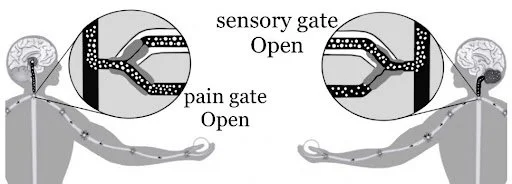
Bad News:
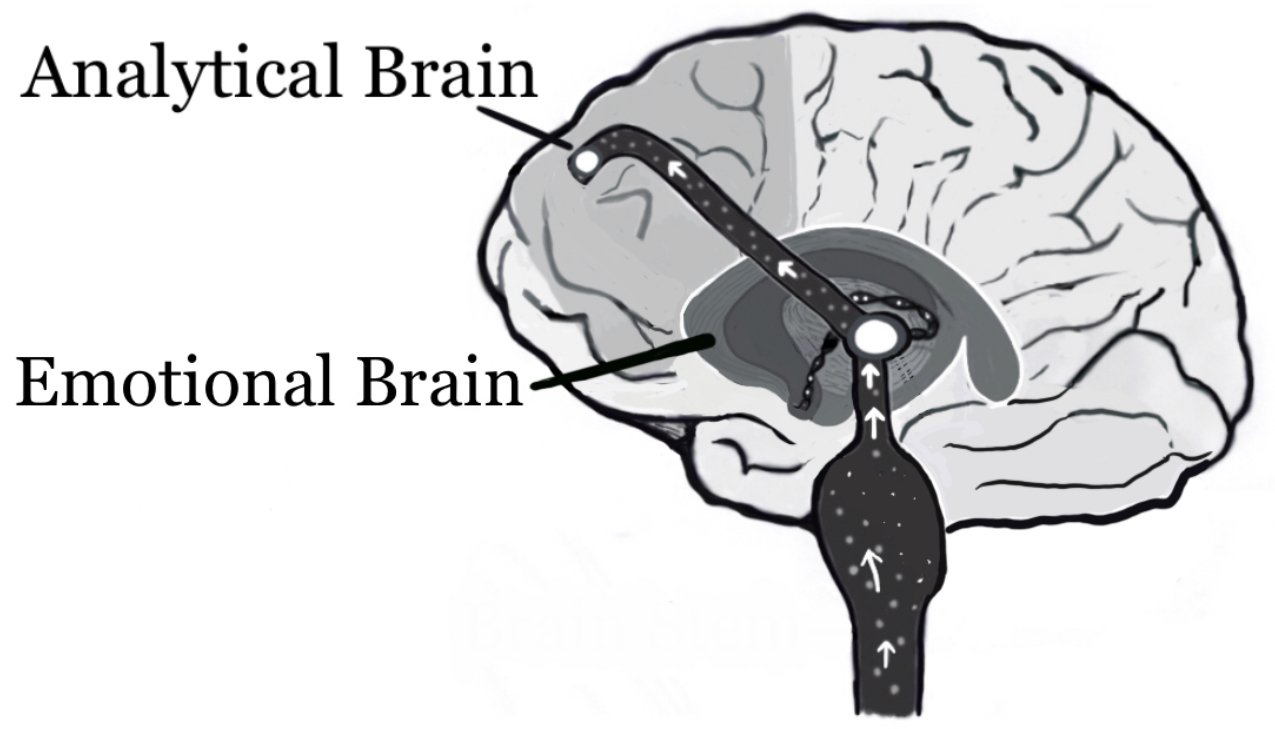
When the pain gate is open (and the sensory gate is closed) all the pain information passes through the thalamus into the Analytical Brain thus resulting in - bad pain.
Bad Pain:
The “bad pain” information triggers your analytical brain, which also triggers your overly negative emotional brain with bad thoughts - bad emotions - bad pain - bad performance.
Good News:
When the sensory gate is open (and the pain gate is closed), all sensory information passes through the brainstem into the Athletic Brain, resulting in good pain.
Good Pain:
When sensory information remains the priority, the sensory gate allows muscle use, muscle efficiency, and muscle memory to function properly.
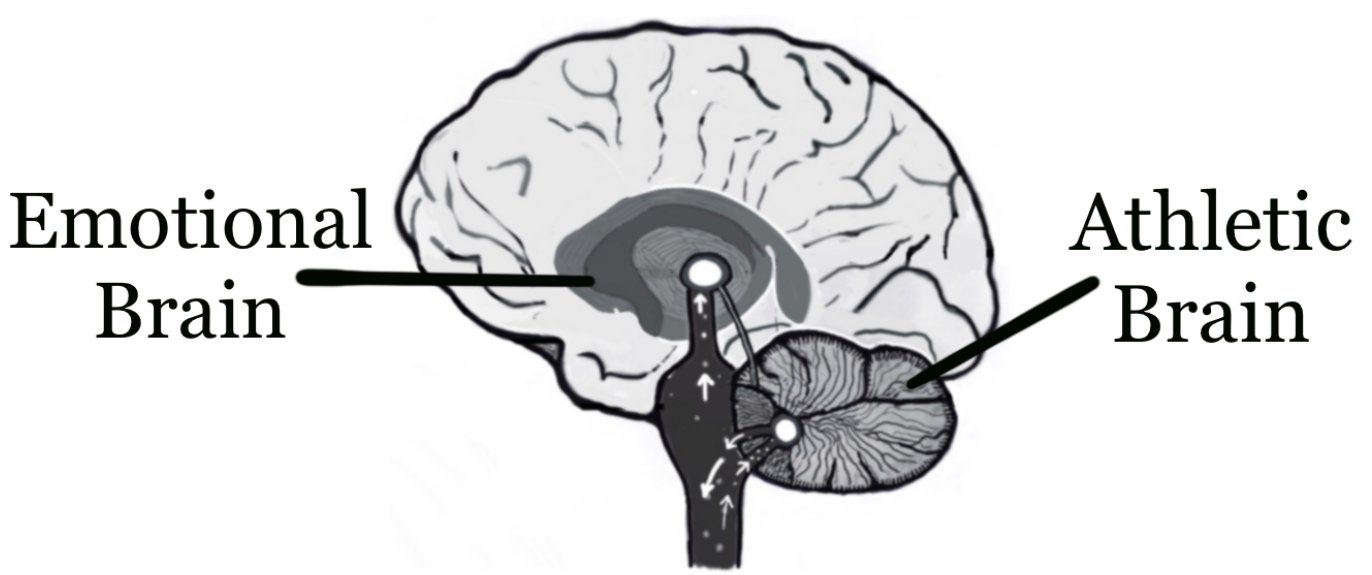
Good emotions from the positive side of your Emotional Brain help keep the pain gates closed, allowing proper use of the six flow-related hormones (dopamine, endorphins, anandamide, adrenaline, serotonin, oxytocin-GLA), which keep you “in the zone” as your brain continues to ignore the perception of physical (and emotional) pain.
How flow state impacts muscle output and athletic performance:
The analytical brain goes away, allowing the nervous system within your Athletic brain to take over with pattern fluidity. Without wasting energy on useless thoughts and negative emotions. Being in a mental (or analytical) state of “nothing” is a great place to be.
The athletic brain becomes highly efficient at signaling the muscle to contract with even greater force.
I feel strong when I feel strong allows athletes to push past evolutionary limitations to become more human.
“You are here for a reason.”