
“More human” requires effort…
Until you get it right.
And then “more human” effort…
Until you can’t get it wrong!
If you want to be good,
You really don’t have a lot of choices,
Because it takes what it takes,
You have to do what you have to do.”
-Nick Saban
The instructions “to do what you have to do” and “until you can’t get it wrong” is your DNA.
Muscle use for athletic performance involves a wide range of genes that fall into two categories: ‘athletic’- and ‘energetic'-genes that influence your athletic performance.
Athletic’-genes influence your muscle fiber type, such as…
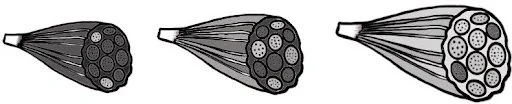
Type I Type IIa Type IIx
(85% slow-twitch) (50% slow-twitch) (85% fast-twitch)
(15% fast-twitch) (50% fast-twitch) (15% slow-twitch)
small medium large
Athletic Genes & Energetic Genes
Muscle Structure & Fiber Composition & Energy Systems
No one is ever 100% slow-twitch or fast-twitch. In general, muscle fiber type falls along an adaptable sliding scale from 15% slow-twitch to 85% fast-twitch or 85% slow-twitch to 15% fast-twitch, with the most common athletic distribution being 50/50.
Muscle fiber composition also varies across muscle groups. For example, stabilizer muscles such as the abdominal muscles and the soleus muscles in your lower leg (calf muscles) are primarily composed of slow-twitch muscle fibers because they work all day long. On the other hand, phasic/power muscles (also known as dynamic “GO” muscles) such as the glutes, quads, lats, pecs, biceps, and triceps are primarily fast-twitch.
Your muscle fiber types are hybrid, meaning muscles contain hybrid fibers that adapt to endurance or speed demands by becoming more oxidative (endurance) or more glycolytic (speed) based on training demands.
For example, biceps are roughly 60% fast-twitch / 40% slow-twitch while triceps are closer to 70% fast-twitch / 30% slow-twitch. And, depending on whether you train with heavy loads or explosive power, both muscle groups can convert highly fatigable Type IIx fibers into more useful, fatigue-resistant Type IIa to become more dynamic “GO” fibers.
Atheltic’-genes
The ACTN3 gene directs the production of alpha-actinin-3 protein found in fast-twitch muscle fibers that supports more speed and more power (with proper training).
The MSTN gene controls the production of the myostatin protein that acts as a natural brake to limit excessive Type IIx muscle growth.
Side note: While anabolic steroids do not alter the core DNA sequence of the MSTN gene,
they can suppress its downstream signaling activity, allowing unnatural muscle growth.
The TTN gene codes for the titin structural protein (the largest protein in the body), which provides passive elasticity and structural integrity, or spring-like action, as muscles contract and relax. (Training objectives will influence TTN gene expression to adjust the “spring-like” action for high-speed/power or for slow-endurance.)
The IL-15RA gene encodes the alpha receptor for interleukin-15, a signaling protein that regulates skeletal muscle development, lean mass gains from exercise, and the reduction of body fat. Variations in this gene influence how the body manages muscle volume and overall fat distribution. In other words, you will get stronger as muscle becomes leaner.
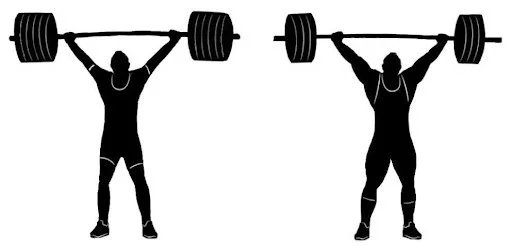
Myth: Strength is associated with muscle mass.
Human Truth: Bigger muscles do not equate to bigger strength.
While elite sprinters train their muscles to become 70-80% fast-twitch fibers, elite endurance athletes train their muscles to become 70-80% slow-twitch muscle fibers. But that is only half of the athletic equation.
Energetic’-genes
What’s "…in your DNA” also determines how YOUR muscles use energy based on the genetics of more than 120 genetic factors for aerobic and anaerobic metabolism, blood production, oxygen utilization, hormones, mitochondrial content, stem cells, myonuclei, recovery, and detoxification.
Metabolism
ACE gene: Influences the renin-angiotensin system, affecting blood pressure, cardiovascular efficiency, and skeletal muscle response during endurance or power tasks.
PPARGC1A (PGC-1α) gene: Regulates mitochondrial biogenesis, helping turn on genes that improve aerobic capacity and energy production in slow-twitch fibers.
AMPD1 gene: Manages nucleotide metabolism inside skeletal muscle, impacting how quickly muscles process energy and manage fatigue during high exertion.
AMPK gene: This fuel-gauge gene triggers pathways that produce more ATP, burning more glucose and fat reserves. It also saves energy by stopping non-essential tasks that consume ATP, such as making proteins, fats, and cholesterol.
MCT1 gene: Controls lactate transport proteins, dictating how efficiently muscle cells clear out lactic acid buildup during intense anaerobic efforts.
Oxygen Use
VEGFA gene: Promotes the growth of new blood vessels (angiogenesis), which delivers more oxygen to active muscle tissues.
HIF1A: Acts as a master switch that senses low oxygen levels and triggers responses to boost oxygen delivery and red blood cell production.
Hormonal Response and Recovery
ADRB2 gene: Encodes beta-2 adrenergic receptors, altering how muscle tissue responds to adrenaline to mobilize energy during exertion.
VDR gene: Controls vitamin D hormone receptors, which regulate cellular processes involved in muscle tissue repair, contraction, and overall strength development.
IL6 gene: Produces interleukin-6, an important signaling protein (myokine) released by contracting muscles to direct tissue healing and the inflammatory response post-exercise.
Detox Process
CYP genes: Convert fat-soluble toxins into a more reactive, water-soluble form.
GST gene: Attaches glutathione to reactive intermediate toxins so the body can safely discharge them from the body.
COMT gene: Helps clear neurotransmitters (dopamine, adrenaline) and estrogen metabolites via methylation.
UGT gene: Adds glucuronic acid to hormones, bilirubin, and dietary compounds for easy elimination.
These are just 19 of the 135 genes that greatly influence athletic performance.
Muscle Use… to do what you have to do… Until you can’t get it wrong!
‘Athletic’-genes + ‘Energy’-genes = Muscle Use
The human body comprises more than 600 muscles, supported by various muscle fibers across multiple muscle groups and three/four energy systems, enabling athletic training within 5 to 7 training zones. (While typical training programs use zones 1-5, other variations may include zones 1-7 or training descriptions that include the terms… capacity training and utilization training.)
Capacity Training goals… grow the size of your physiological engine. (Zone 2)
Utilization Training goals… maximize the fitness you already own. (Taper training without the need for recovery)
Training Zones:
Zone 1 -Recovery <55%
Zone 2 -Base/Endurance Training 55-70%
Zone 3 -Tempo Training 70%-85%
Zone 4 -Lactate Threshold 80-90%
Zone 5 -VO2 max 90-100+%
Zone 6 -Anaerobic Capacity/Power Training 100% ++
Zone 7 -Neuromuscular Max Effort 100% +++ (breathing your own blood)
And the most desperate training zone…
Zone 8 - (beating a dead horse) Overtraining
STAY AWAY from zone 8!
Energy Systems:
Oxidative System (aerobic with oxygen)
VO2 max System (Oxidative aerobic & Glycolytic anaerobic)
(While this system signifies the upper limits of oxygen use, training to improve VO2 max relies on anaerobic activation.)
Glycolytic System (anaerobic without oxygen)
Phosphagen System (explosive burst of energy)
“I am inevitable!”
-Pain